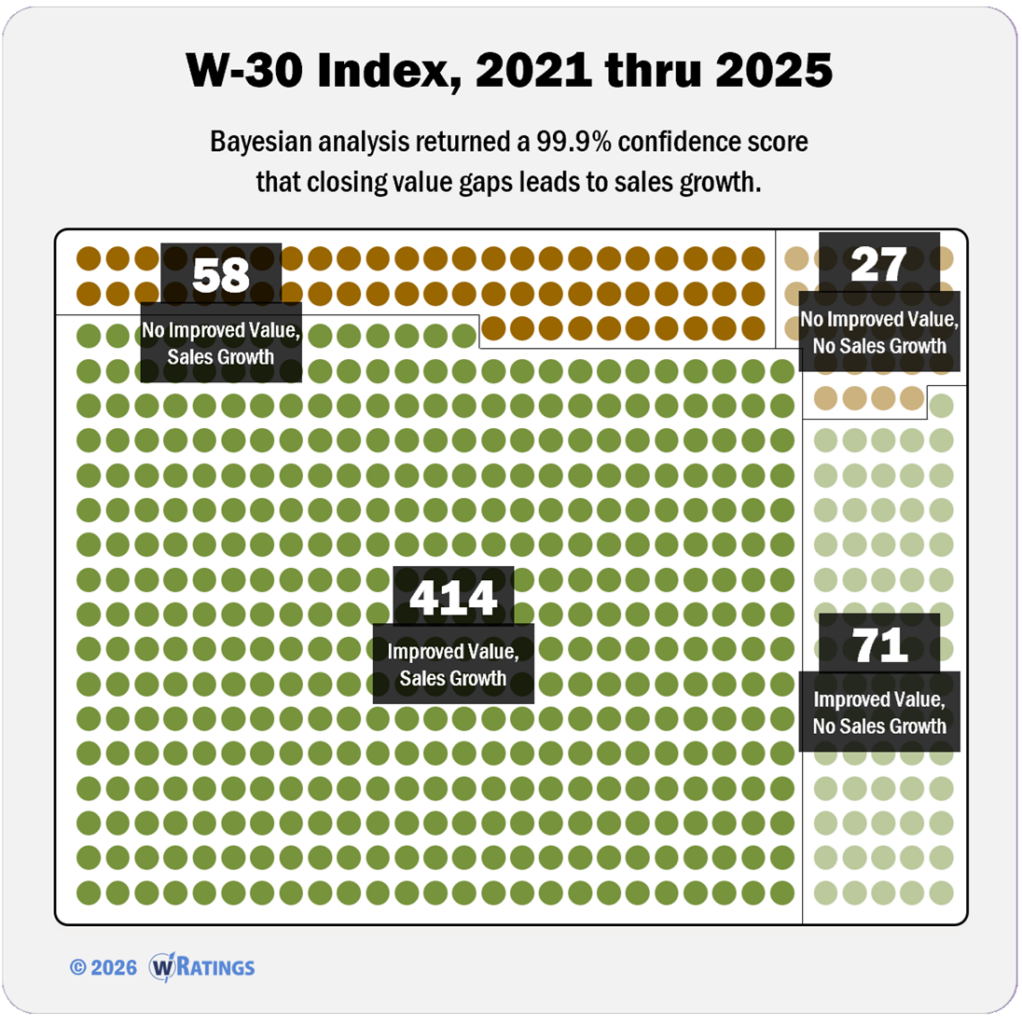
With near certainty (99.9%), customer and financial data from the W-30 Index proves that closing customer value gaps drives sales growth.
Why Companies Lose Sales
Most companies believe they deliver strong value to customers. But customers often experience something different.
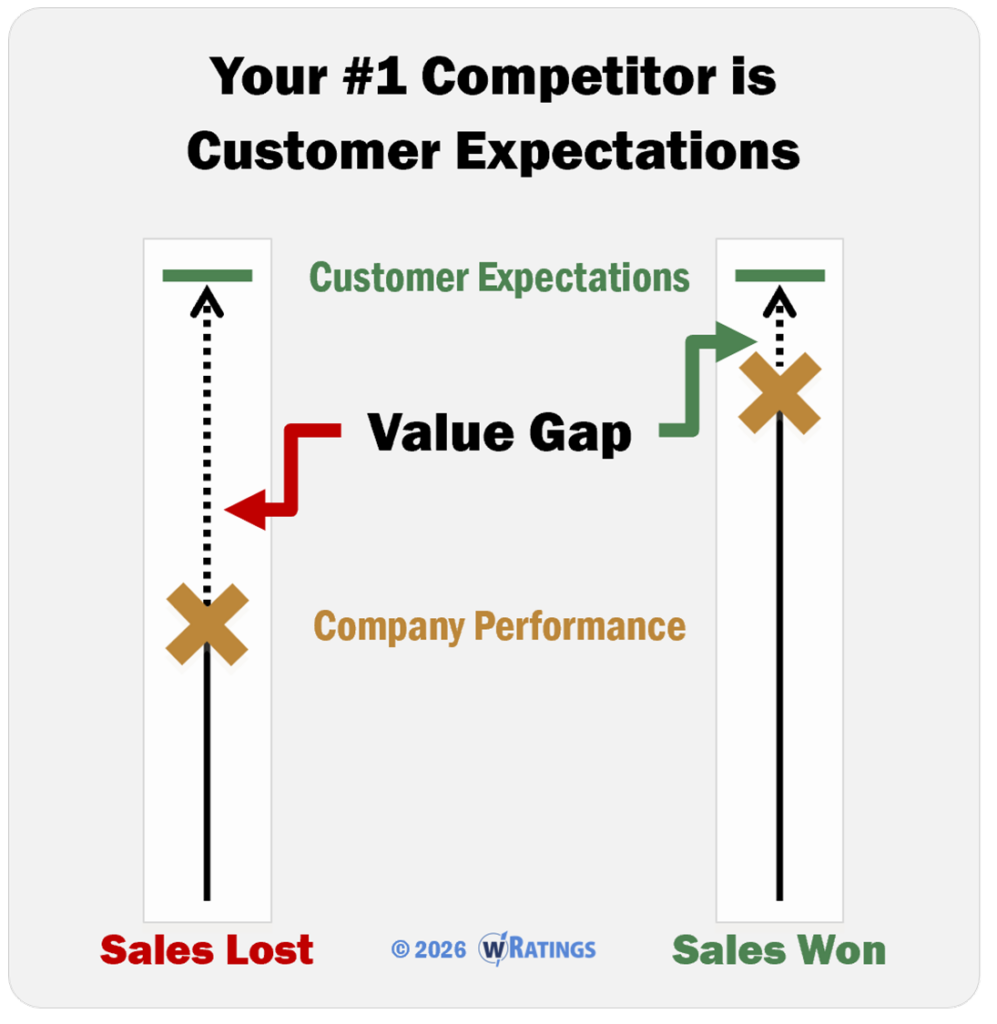
The difference between what customers expect and what organizations deliver creates a Value Gap.
And when your gap is larger than your competitors, sales are lost and customers churn. Close that gap and sales are won.
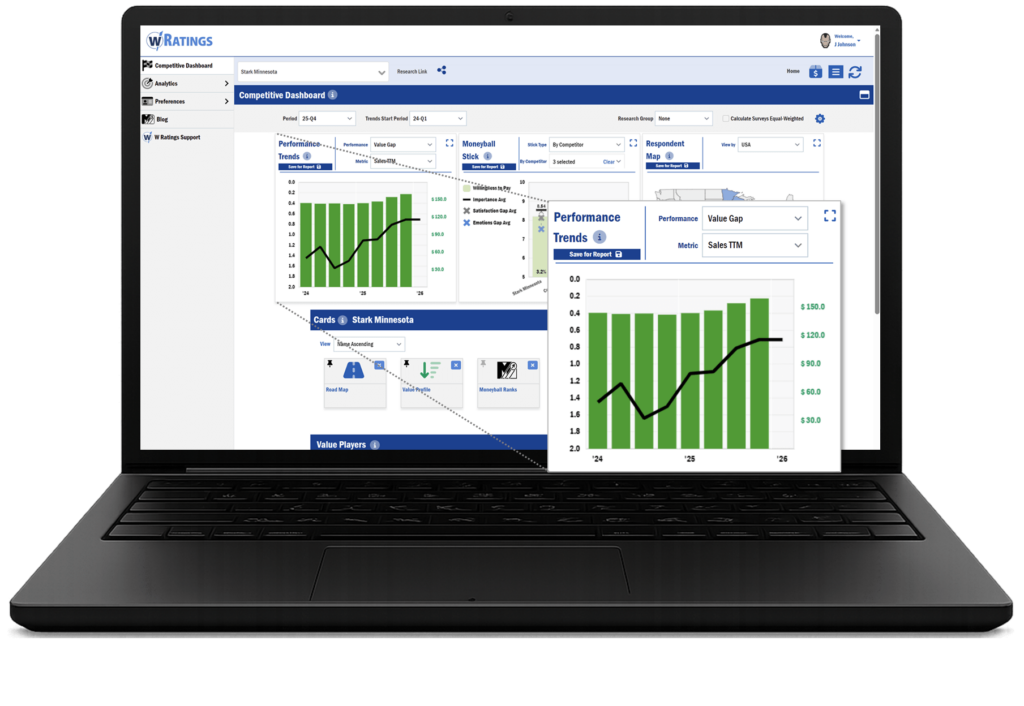
The W Ratings platform was designed to measure and close the value gap between what your customers expect and your company performance.
From Static to Dynamic Value
Traditional analytics give you a printed map. If there’s a roadblock, you are late or worse yet, you crash into it.
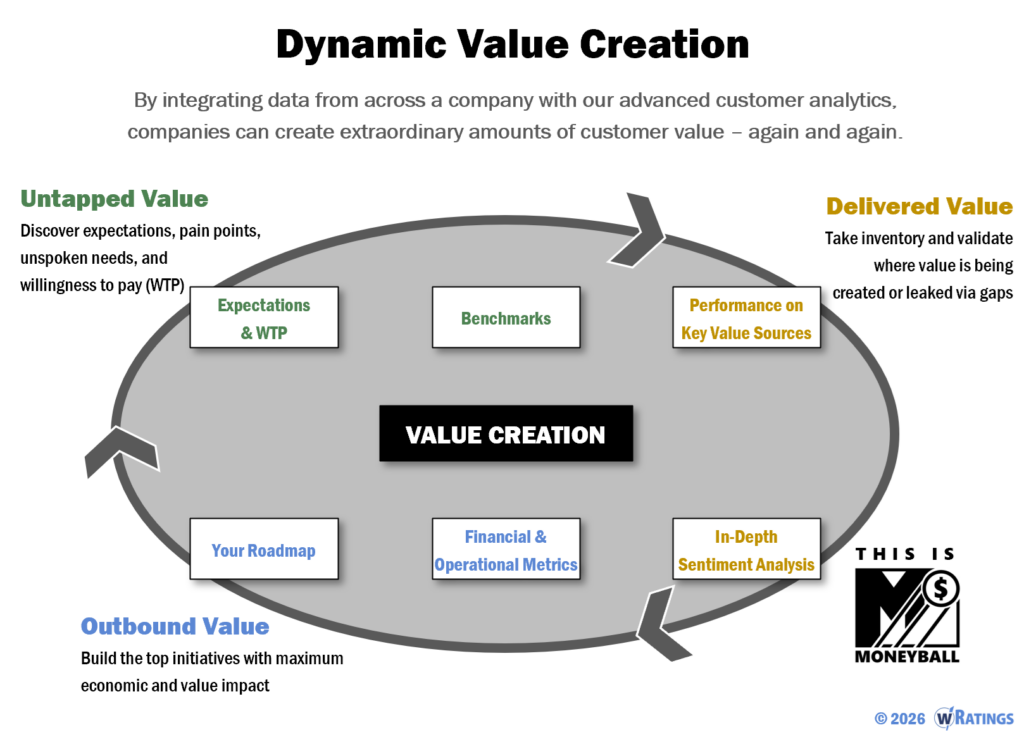
Our platform acts like a real-time GPS. It takes your current performance, absorbs real-time market signals from customer perception and internal operating metrics, and instantly recalculates the fastest, safest route to sales growth.
This is Moneyball for Sales Growth.
The Engine of Proof
The W Ratings platform uses Bayesian analysis, a method widely used in advanced decision systems at successful companies like Amazon (probability a customer will purchase), Netflix (probability a user will watch a specific title), and Google / Meta (probability a user will click an ad).
The same reasoning used by the world’s most advanced digital companies can be applied to customer value improvement.
Running a Bayesian analysis to stress test the W-30 data shown in the chart, the model returned a 99.9% confidence score.
The probability that improving customer value leads to sales growth isn’t just high; it’s nearly certain.
Additional Evidence
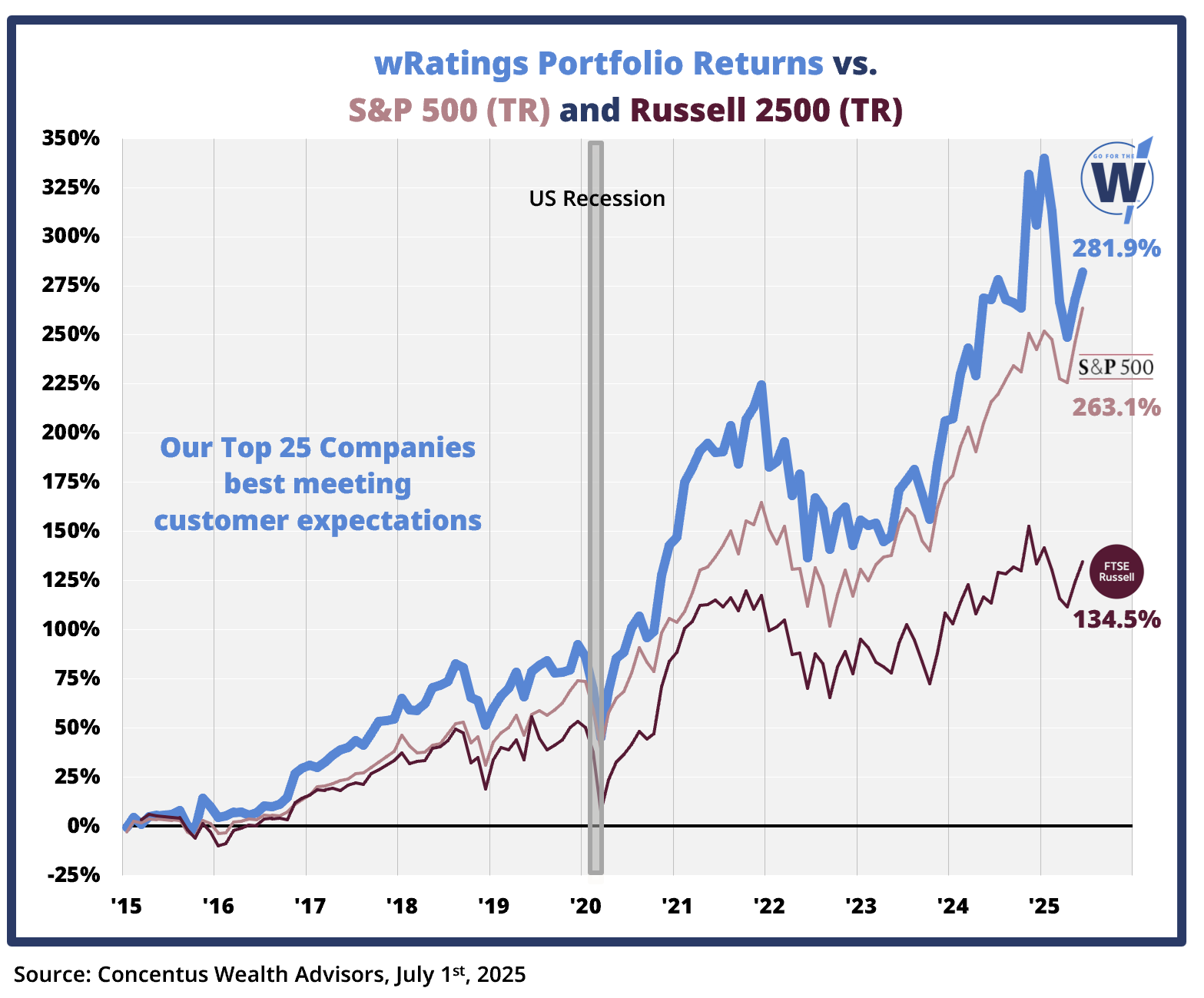
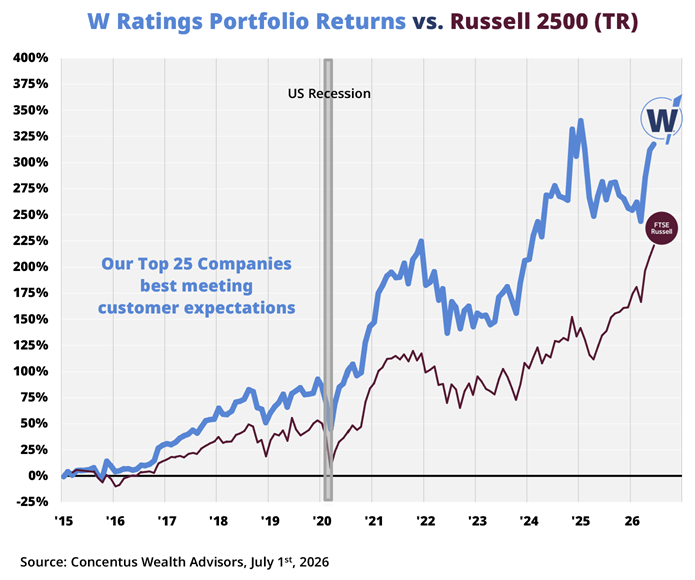
One hedge fund investor started a portfolio based on the top 25 ranked companies in our benchmark database, and it has continually out-performed traditional benchmarks such as the Russell 2500 (Total Return).
Since 2017, our data is one of the key customer data sources to rank the Top 250 Managed Companies by the Drucker Institute. The Wall Street Journal publishes the annual rankings near the end of each calendar year.
The business management community has vetted our research, which you can read about in the May 2002 cover article in Harvard Business Review.
Since 2008, the hedge fund community has continually licensed the use of our benchmark data to make investment decisions. Our data is baked into many ETFs/Mutual Funds traded publicly.