Know where to invest.
Know where to defend. Know where customers will pay more.
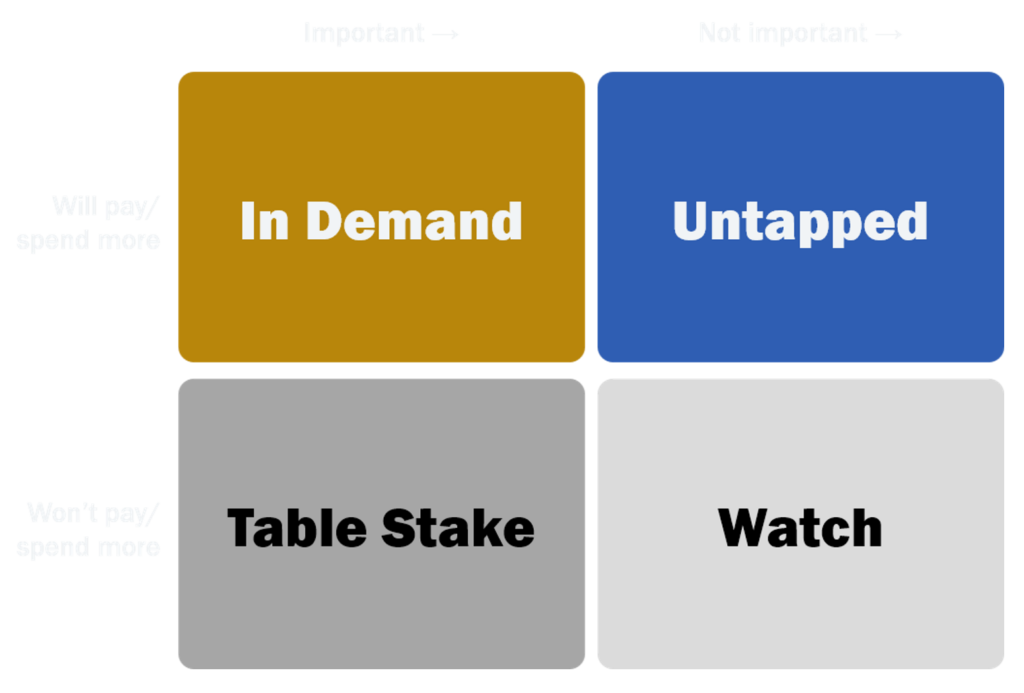
We sort every customer, on every need, into one of four boxes — then grade each box so you know how to best grow.
From customer needs . . .
to your living playbook.
Customers call almost every need important — but only some can carry a price. Our analysis separates demand from pricing power, then simulates your growth priorities to find the best odds for you to win.
How It Works
Invite
Your customers speak
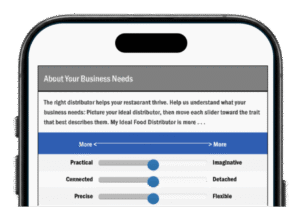
Send your customers a link to a short needs analysis built for your industry.
Takes just 3 to 5 minutes to complete and asks how they define success, not simply if they will recommend you.
Sort
Four buckets per need
Is this need important — and would your customers actually pay or spend more for it? The two questions form the basis for our model.
And sentiment analysis connects you with the why.
Signals
Simulate for the best odds to win
Can a need command a premium? If not, does it require repairing to ensure future growth?
Thousands of simulations separate your growth signals from just noise.
Tailor
Build playbooks by segment
We build tailored playbooks that grow customer wallet share and turn prospects into fans — with one-page battlecards on how to do it.
Playbooks get updated as new answers come in.
Why traditional feedback doesn't drive growth
NPS is out. Moneyball is in. Adapt or die.
Satisfied customers didn’t save Blockbuster, Sears or Nokia. Here’s why satisfaction alone doesn’t work.
Everything scores “important”
Measures that flag everything cannot prioritize anything. Raw importance scores create long “to-fix” lists without a budget logic.
Complaints don’t price the prize
Demand and money are different questions. Many loudly demanded needs are exactly the ones customers refuse to pay a premium for.
Satisfaction is not spending
Customers can be fully satisfied and still shift business to rivals. A happiness score does not measure future economic behavior.
Averages hide market segments
One need may contain two markets: customers who ask for it and customers who will pay for it only when surfaced.
Silence on how decisions actually get made
Two individuals with identical satisfaction scores can require completely different persuasion strategies to win.